

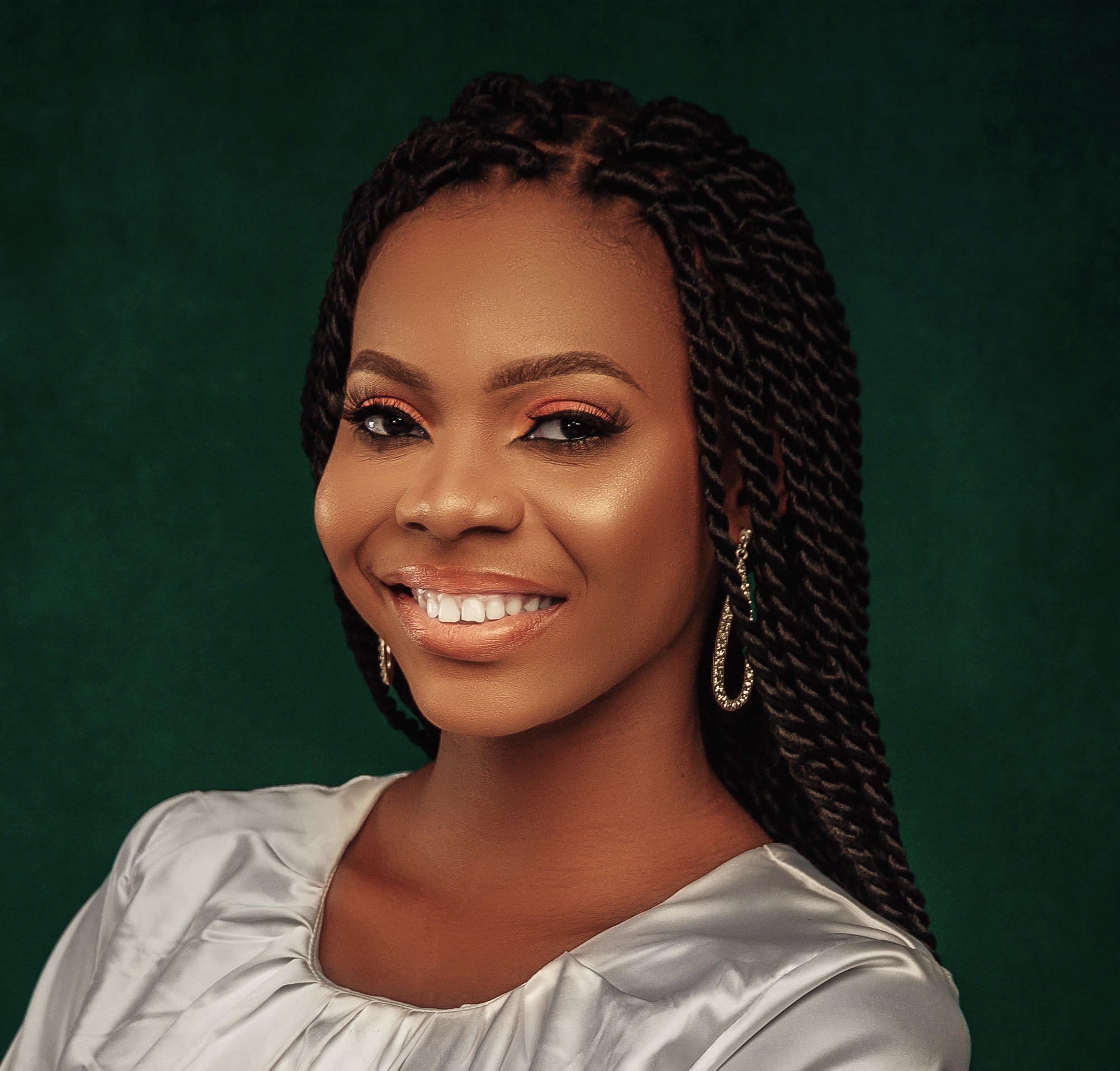
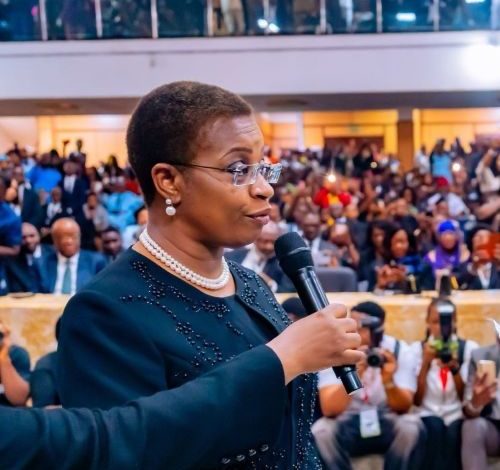
On Friday, August 28, 2026, in Port Harcourt, Oyinkansola Badejo-Okusanya, SAN, took the oath of office as the 33rd President of the Nigerian Bar Association.
Thirty-five years after Priscilla Kuye, Badejo-Okusanya became the first woman elected directly by members to lead the association, having secured 12,317 votes, representing 47.18 per cent of the total, defeating Lateef Akangbe and Olumuyiwa Akinboro.
The moment was historic, but history alone does not adequately capture its significance. Badejo-Okusanya is not only the second woman to head the NBA; she is the first to win its presidency outright through an electoral contest. While Priscilla Kuye became the NBA’s first female president in 1991 after Clement Akpamgbo resigned to take up the position of Attorney-General and Minister of Justice, Badejo-Okusanya’s ascent came through the ballot, not succession. Her victory therefore marks a new chapter in the history of the Bar.
A daughter of Professor Olufolabi Olumide, the founding Vice-Chancellor of Lagos State University, and Clara Folasade Olumide, the first female Registrar of the University of Lagos, she emerges from a family of pioneers. Her rise is more than a personal victory, as her family roots not only create context for that achievement but also show the reward of credible investment in female education.
Her victory is not an isolated one. Her younger sister, Dr. Jumoke Oduwole, celebrated the inauguration as both a personal and historic achievement:
“Today, history was made, and my heart is filled with pride, gratitude, and joy. Congratulations to my sister, Mrs. Oyinkansola Badejo-Okusanya, SAN, on her official inauguration as the 33rd President of the Nigerian Bar Association, marking a historic milestone as the first elected female President in the NBA’s 66-year history.”
More than the story of one woman breaking through a professional barrier, it is the story of a family in which women have repeatedly been prepared to occupy spaces of institutional leadership.
For Badejo-Okusanya, that foundation would become the intellectual and moral scaffolding for a career that has taken her from the classroom to the courtroom, from public-sector reform to the leadership of Nigeria’s legal profession.
In an unconventional academic journey, she first studied English at the University of Lagos before returning to study Law, later earning an LL.M. in Commercial and Corporate Law from Queen Mary University of London. Called to the Nigerian Bar in 2002, she went on to build a career spanning private legal practice, public service, arbitration and justice-sector reform, culminating in her elevation to the rank of Senior Advocate of Nigeria in 2025.
It is this combination of legal practice and institutional experience that gives particular weight to the reform agenda she now carries into the NBA presidency.
Her campaign was built not on symbolism but on reform. She promised to move lawyers “from surviving to thriving,” placing economic dignity, welfare, technology and institutional independence at the centre of her vision.
For younger lawyers especially, professional prestige can coexist with significant economic vulnerability. Badejo-Okusanya has therefore pledged to push for compliance with the Legal Practitioners’ Remuneration Order as part of a broader effort to secure fairer remuneration within the profession.
Her welfare agenda extends beyond income. She has announced plans for partnerships with medical institutions to provide discounted health screenings and wellness programmes for lawyers, recognising that a profession demanding intellectual stamina, long hours and sustained responsibility cannot afford to treat the wellbeing of its practitioners as an afterthought.
Leveraging advances in technology, Badejo-Okusanya has promised a digital overhaul of NBA services, with the aim of making payments, practising stamps, continuing professional development and access to member services easier, faster and more transparent. Her plans include subsidised electronic law reports, a service portal through which members can submit their credentials and areas of interest for appointments and opportunities, and an upgraded NBA Affinity Card offering negotiated discounts on services including airlines, hotels, supermarkets and pharmacies.
The philosophy behind the technology agenda is straightforward: it is not deployed merely to make the NBA appear modern, but to make membership work better.
For a national professional association, digital transformation is ultimately about accessibility, efficiency and value. Lawyers should spend less time navigating bureaucracy and more time practising law. Yet perhaps the most consequential test of Badejo-Okusanya’s presidency lies beyond member services.
The NBA occupies a unique position in Nigeria’s democratic architecture. It is expected to defend the rule of law, protect judicial independence and challenge abuses of power while maintaining sufficient independence from the political interests it may need to confront. Badejo-Okusanya has signalled that she intends to preserve that independence.
In her inaugural address, she pledged constructive engagement with governments but insisted that the NBA would not be captured by any government, political party, region, religion, interest group or individual.
“Our loyalty is to the Constitution, to justice, to the rule of law, and to you, the members whose mandates we hold in trust,” she declared.
Her administration has also pledged to defend judicial independence while demanding accountability, efficiency and integrity within the justice system. Delays in the administration of justice, conflicting decisions and corruption are among the issues she has identified as matters the Bar cannot afford to ignore.
It is a difficult balance: The NBA must defend the independence of judges without becoming indifferent to weaknesses within the judiciary, and defend the institution of law while demanding that it live up to the standards it expects of others. This is where the idea of a bolder Bar becomes more than a campaign slogan. Boldness, in Badejo-Okusanya’s conception, is not noise — it is the courage to confront difficult truths; to defend institutions when they are threatened; to demand reform when they fall short; and to engage power without becoming subordinate to it.
The significance of the moment is perhaps best captured by Badejo-Okusanya herself. Twenty-four years after attending her first NBA Annual General Conference as a newly called lawyer and watching the baton of leadership pass to a new president, she returned to the same association not as an observer, but as its president.
In her own words: “May it be said, when this tenure is over, that the Bar became bolder; that lawyers felt seen, protected and empowered; and that we left the Nigerian Bar Association stronger than we met it.”
Her election is a breakthrough for representation, but Badejo-Okusanya has framed it around competence, capacity and vision. The true measure of her presidency will be whether lawyers practise and earn better, and whether the NBA becomes more responsive, independent, technologically capable and credible in defending the rule of law.
Her family story adds deeper significance: her mother’s pioneering role in university administration, her sister’s public leadership, and her own rise to the head of the legal profession demonstrate what education, opportunity and an enabling environment can make possible.
The girl-child conversation takes on deeper meaning through Badejo-Okusanya’s life. Education should not only put girls in classrooms but also empower them to lead and build institutions. For her, the next task is to build the institution she now leads.
The historic photograph has been taken, the oath administered, and the first woman elected directly by the membership now leads the Nigerian Bar Association. But history will move on, leaving the harder questions of her mandate—and whether young women find the doors of leadership wider than before.
Badejo-Okusanya has already shattered the ceiling. Her greater achievement will be to strengthen the structure and leave behind a Bar that no longer needs a “first woman” to prove that women belong at the top.