

Nigerian-Canadian Professor Taiwo Afolabi Wins Prestigious Australian Fellowship
...to deliver keynote address at 2026 Global Theatre Congress

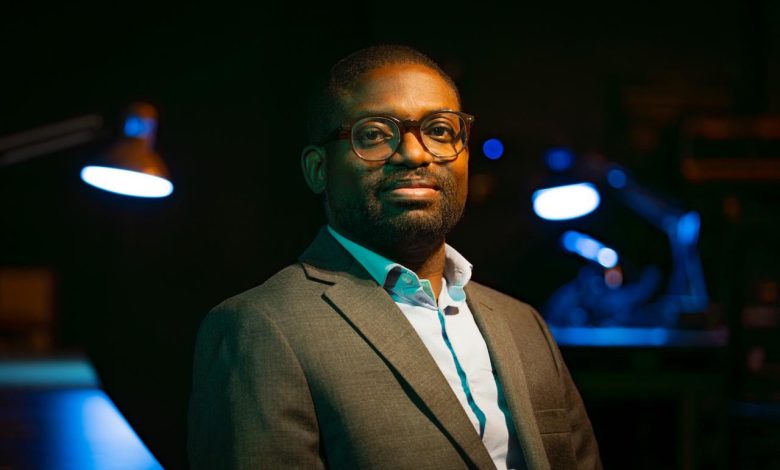
Nigerian-Canadian professor, theatre practitioner and Canada Research Chair in Socially Engaged Theatre, Prof. Taiwo Afolabi, has been awarded the prestigious Miegunyah Distinguished Visiting Fellowship at the University of Melbourne in Australia.
He will also deliver the keynote address at the 2026 World Congress of the International Federation for Theatre Research, titled “What Theatre Does: Paradoxes, Propositions and Provocations.”
Afolabi serves as the Canada Research Chair in Socially Engaged Theatre at the University of Regina in Canada and is the founding director of the Centre for Socially Engaged Theatre.
A 3M National Teaching Fellow — Canada’s highest national recognition for teaching excellence — Afolabi is also a Fellow of the Royal Society of Arts and a member of the Royal Society of Canada’s College of New Scholars, Artists and Scientists. He is also an alumnus of the Governor General’s Canadian Leadership Conference.
He is widely regarded as one of the leading voices in socially engaged theatre and justice studies, using performance, storytelling and creative practice to address issues ranging from migration and race to identity, inequality and human rights.
“I’m honoured to be selected for the Miegunyah Distinguished Visiting Fellowship at the University of Melbourne, Australia. My campus-wide public lecture will focus on justice and socially engaged theatre. I look forward to engaging communities across and beyond the university, including faculty members and graduate students,” Afolabi told Africa Interviews.
The Miegunyah Distinguished Visiting Fellowship is one of Australia’s most competitive academic appointments. Established in 1993 and funded through the Russell and Mab Grimwade Miegunyah Fund, the programme brings internationally distinguished scholars to Melbourne to enrich the institution’s academic, intellectual and cultural life through public lectures, seminars and collaborative research.
Fellows are selected through an internal nomination process and cannot apply directly, making the award one of the most prestigious academic fellowships in Australia. A fellowship typically lasts between four and eight weeks and carries responsibilities including delivering a major public lecture, conducting specialist seminars, consulting with staff and students, and participating in collaborative research.
As part of the fellowship, Afolabi will deliver a public lecture — “Staging Justice: People, Places, Planet and Practice” — at Federation Hall in Melbourne on July 23.
The lecture will highlight how the performing arts can challenge deficit narratives and centre the voices of individuals with lived experiences, influencing policy and transforming society. It will also explore how socially engaged theatre can challenge the criminalisation, over-policing and over-incarceration of marginalised communities in Australia and internationally, proposing new ways of imagining more just and equitable societies.
Afolabi, who recently arrived in Australia to begin the engagements, described the fellowship as both an honour and an opportunity to deepen conversations around justice, equity and the role of the arts in social transformation.
The University of Melbourne noted that Afolabi’s work has helped reshape governance models through decolonisation and equity-driven approaches, and that his projects have influenced policy discussions and community engagement initiatives across multiple continents.
The institution added that the lecture would encourage artists, activists and the wider public to step into spaces where their voices are needed and to creatively interrogate the foundations of justice in their communities.
Afolabi founded Theatre Emissary International, an initiative dedicated to using performance and creative practice to promote dialogue, inclusion and social change. With experience spanning more than 35 countries across six continents, the Nigerian-born scholar has championed transformational leadership and innovation while building partnerships across higher education, the arts and beyond.
In a conversation with Africa Interviews, Afolabi spoke about migration, race, identity and the power of storytelling to reshape global narratives about Africa, while highlighting how socially engaged theatre can address inequality and inspire collective action and social change.
His keynote address at the International Federation for Theatre Research World Congress — scheduled later this month — will bring together leading theatre scholars and practitioners from around the world to discuss the future of performance research and artistic practice