


Lagos Life Game Hits 5 Million Players in 9 Days as Shalom Rayhamen’s Vatar Raises $500K
Game valued at $10m

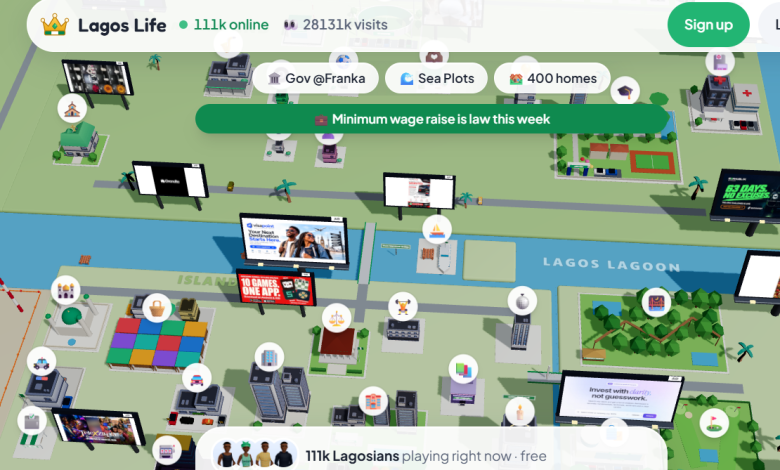
Lagos Life, the browser-based game that simulates everyday life in Lagos, has passed five million players nine days after launch, and its parent company, Vatar Inc., has raised $500,000 in funding, reportedly at a $10 million valuation.
Vatar is the startup of Nigerian software developer Shalom Rayhamen, who announced the round on X as an angel round led by AB Hassan, Nathan Nwachuku and GB Agboola.
Reports identify them as Mono co-founder Abdulhamid Hassan, Terra Industries Chief Executive Officer Nathan Nwachuku and Flutterwave Chief Executive Officer Olugbenga Agboola, who invested through his fund, Resilience17. Technology entrepreneur Oo Nwoye is also reported among the investors. The round reportedly closed within a day. Vatar plans to spend the money on product development, marketing and recruitment.
“Lagos is just the beginning,” Rayhamen wrote in her announcement. “We’re building entire worlds, and there’s so much more to come.”
The round followed the game’s sudden rise after its launch on October 1, 2026, Nigeria’s Independence Day. By October 8, Lagos Life had drawn about 4.3 million users across 15 countries, with peak concurrent players above 200,000, according to reports citing the company’s figures.
The numbers had been climbing by the day. On October 4, three days after launch, Rayhamen announced that Lagos Life had crossed 50,000 concurrent players. She reported 50,266 people playing at that moment, 399,187 total players, 813,166 visits that day and more than 2.32 million visits since launch. The game was 813 players short of 400,000, she said, and she pointed followers to a live stats page that updates every 30 seconds.
Three days later, on October 7, six days after launch, Rayhamen announced on X that Lagos Life had passed three million players. She reported 114,224 people online at the same time and 26.7 million visits, and thanked users for building the world with her. “Guys, what have we started?!” she wrote. She closed with a target: “3M down. 10M, we’re coming!”
A day later, on October 8, Rayhamen announced that Lagos Life had crossed four million players, with 103,359 playing at that moment, 1.47 million visits in a single day and 30.5 million visits since launch. “4M down. 10M, we’re coming,” the post said, repeating the target of 10 million players that her earlier post had set. That figure is a player goal, not a financial one.
On Friday afternoon, October 9, Rayhamen announced that the game had reached five million players. Her funding announcement, which put the total at more than 4.7 million, came earlier the same day.
How Lagos Life started
The idea grew from Rayhamen’s childhood love of The Sims 3, a life-simulation game in which players create characters and run their virtual lives. “I grew up playing The Sims 3 and always wondered what it would be like if the Sims lived in a world inspired by ours,” she wrote in her launch post on October 1.
What turned the question into a project was a video of a danfo, the yellow commercial minibus, riding through Lagos, posted by [@eureka_seamless, creator of Lagos Run]. It “sparked an idea: Lagos Life Sims,” she wrote. Her post invited players to “take a look around,” adding: “Who knows, you might make a new friend in the Sims world.”
Rayhamen, a software developer with nearly a decade of experience, built the first version of Lagos Life overnight, using artificial intelligence tools for research and coding. She released it the next morning.
In the game, players create characters, find jobs, earn virtual naira, pay rent and interact with other users in a shared digital Lagos. It draws on familiar experiences, including public transport, power outages, local entertainment and small business. Players can also take part in a virtual political system [add one concrete example, such as elections or a campaign feature].
Rather than inventing an unfamiliar fictional world, Lagos Life turns recognisable Nigerian experiences and urban culture into an interactive city accessible through a web browser.
Turning viral attention into a business
Vatar earns money from advertising, brand partnerships, music promotion, football streaming and sales of virtual currency. Businesses can advertise on billboards and plots in the game, and musicians can pay to have their songs played in virtual clubs. Food delivery company Chowdeck is integrated into the platform.
The company reports more than $170,000 in revenue earned and contracted since launch, including about $46,900 in its first four days.
Vatar has now introduced age verification, message screening, and reporting and blocking tools. It has also extended Lagos Life to Port Harcourt, the first sign it intends to grow beyond a single virtual city.