



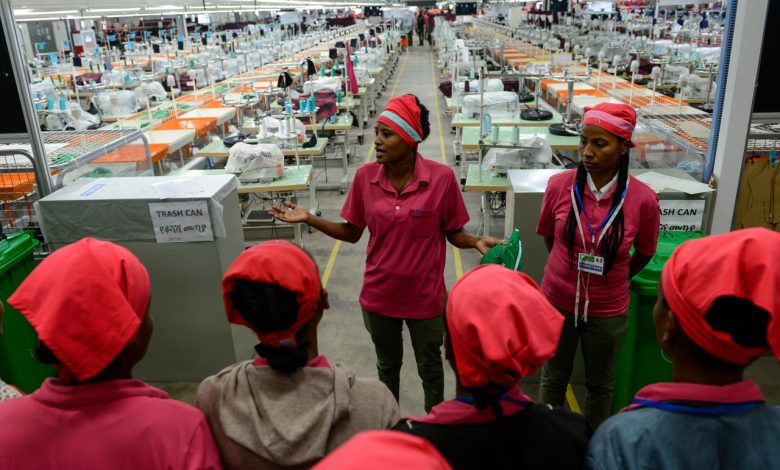
A new philanthropic investment initiative, the Africa Jobs Fund (AJF), has launched with plans to mobilise $100 million over five years in funding to support high-productivity jobs across Sub-Saharan Africa, targeting export manufacturing and labour mobility as pathways out of poverty.
The fund, announced this week in Nairobi, will be led by Daniel Yu, founder of Wasoko, one of Africa’s largest B2B e-commerce platforms, which raised $145 million and serves more than 150,000 informal retailers.
Yu also chairs Malengo, an education migration non-profit supporting East African youth pursuing career pathways in Germany. The fund will be housed under Renaissance Philanthropy.
The initiative counts several high-profile global and African figures among its advisers, including Iyinoluwa Aboyeji, co-founder of Andela and Flutterwave, and former USAID administrator Samantha Power.
According to AJF’s launch statement, the fund aims to back commercially viable firms capable of creating jobs at scale, with projections that its investments could generate more than $50 billion in income gains for African workers and more than double the lifetime income of at least 250,000 low-income people.
The launch comes amid growing concern over Africa’s widening employment gap and persistent poverty levels despite rapid population growth. AJF noted that by 2040, around 600 million of the world’s extreme poor are expected to live in Africa, while only about three million formal jobs are currently created annually across the continent.
AJF identified export manufacturing and international labour mobility as two of the most reliable routes for lifting people out of subsistence poverty. The fund said African economies are becoming increasingly competitive for manufacturing due to lower wage levels relative to Asia, preferential tariff access to major global markets and growing efforts by international buyers to diversify supply chains.
According to AJF, moving workers from subsistence farming into export manufacturing can increase productivity by as much as five times. However, AJF noted that pioneer companies entering new export markets often face high setup costs linked to worker training, supply chain development and buyer acquisition. The fund said it intends to support such businesses until they become attractive to commercial investors.
On labour mobility, AJF said more than 15 million people migrate to high-income countries annually, with demand expected to rise sharply due to ageing populations and labour shortages in sectors such as healthcare, logistics and skilled trades.
The statement noted that African workers often face barriers including predatory recruitment fees, complex migration systems and inadequate training, while employers abroad struggle to access reliable recruitment pipelines. AJF said it plans to support companies helping formalise international labour mobility pathways for African workers.
Speaking at the launch, Yu described poverty primarily as a jobs problem. “Africa has hundreds of millions of working-age people reliant on subsistence agriculture or informal work that pays a few dollars a day,” he said. “Those same people, in the right job at home or abroad, could earn significant multiples of their income.”
Yu added that AJF was created to support businesses capable of creating large-scale economic opportunities across the continent. “AJF exists to back the companies that create those jobs and opportunities. Nothing else in development comes close to the impact of getting this right, and that is why I am building AJF,” he said.
Power, who served as USAID administrator under President Biden, described labour mobility and export manufacturing as among the world’s most effective anti-poverty tools.
“In my time leading USAID, it became clear that helping people access better jobs — through international labour mobility and export manufacturing — is one of the most powerful tools we have to lift families out of poverty,” she said.
“The Africa Jobs Fund is pursuing this with tremendous rigour and ambition, and it is in our collective interest to do all we can to support and scale their investments.”
Aboyeji said the next phase of African entrepreneurship would focus on companies capable of creating employment at scale.
“African founders have shown they can build category-defining companies. The next decade is about building the ones that put millions of people to work. AJF deserves the attention of every founder and funder serious about jobs and growth on the continent,” he said.
Kumar Garg, President of Renaissance Philanthropy, said the initiative reflected the organisation’s focus on supporting operator-led philanthropic models designed around measurable impact. “The Africa Jobs Fund is exactly the kind of thesis-driven, operator-led philanthropic fund that Renaissance Philanthropy was built to support,” he said.