


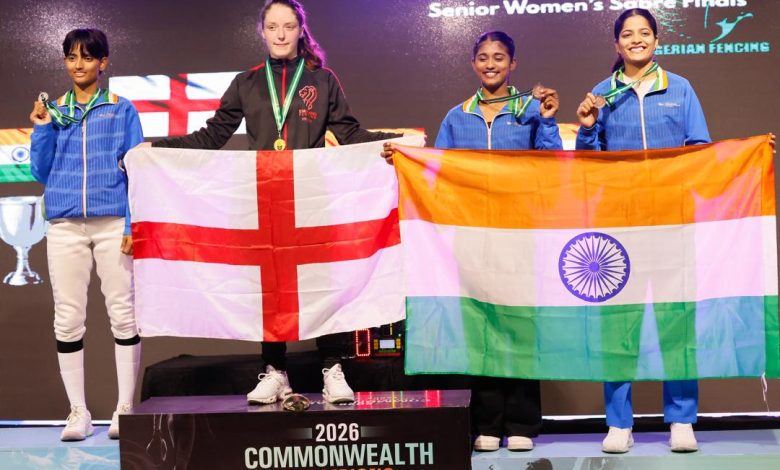
Nigeria made sporting history in August by hosting the 2026 Commonwealth Fencing Federation Championships in Lagos, the first time the event has been staged on African soil.
Holding from August 9 to 14 at Rugby School Nigeria in Victoria Island’s Eko Atlantic City, the six-day championships have brought together athletes and delegations from more than 20 nations, including Australia, Bangladesh, Botswana, Cyprus, England, Ghana, Guernsey, Jamaica, Kenya, Mauritius, Namibia, Northern Ireland, Pakistan, Singapore, South Africa, The Gambia, Togo, Wales and host nation Nigeria.
More history was made on Tuesday, August 11, when wheelchair fencing debuts as a medal event. Previously showcased as a demonstration sport in London in 2022, its inclusion this year marks a new era of inclusivity and opportunity.
For Nigeria, hosting the championships for the first time is a proud achievement. The country has fielded a 12-strong team — six men and six women — ready to test their skills against rivals from South Africa, India, and beyond. For the Nigeria Fencing Federation (NFF), it is also an opportunity to reposition fencing as a viable sporting pathway for Nigerian and African youth.
Fencing in Nigeria occupied a corner of the country’s sporting landscape, overshadowed by the mass appeal of football, athletics and basketball. But this week, the sound of blades meeting on the piste in Lagos signals how a sport once perceived as exclusive and inaccessible is beginning to find a new audience and a new generation of athletes in Africa.
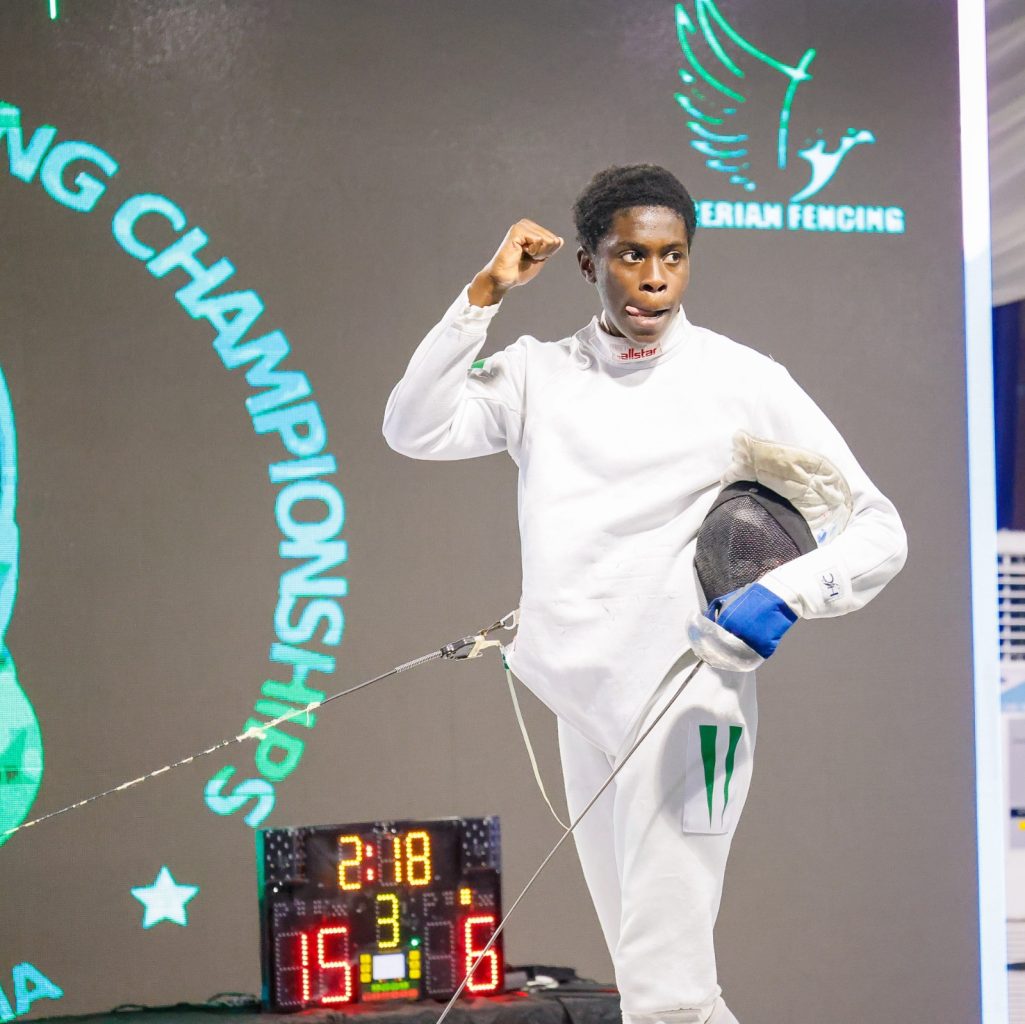
The championships began with 16-year-old delivering what became Nigeria’s first international fencing gold medal. Competing for Nigeria for the first time after previously representing England, the teenager dominated the Men’s U-23 Épée competition, defeating India’s Lokesh Vemani, an Asian champion, 15–5 in the final.
Esiovwa-Thompson’s victory demonstrates what the federation hopes the championships will make possible for the next generation, particularly for a young Nigerian athlete competing before a home crowd. Esiovwa-Thompson’s achievement also reflects the value of international exposure at an early age. Before switching his sporting allegiance to Nigeria, he had already established himself in the British fencing system, winning U-13 gold at the 2022 Wratislavia Challenge and contributing to a cadet team bronze in Naples.
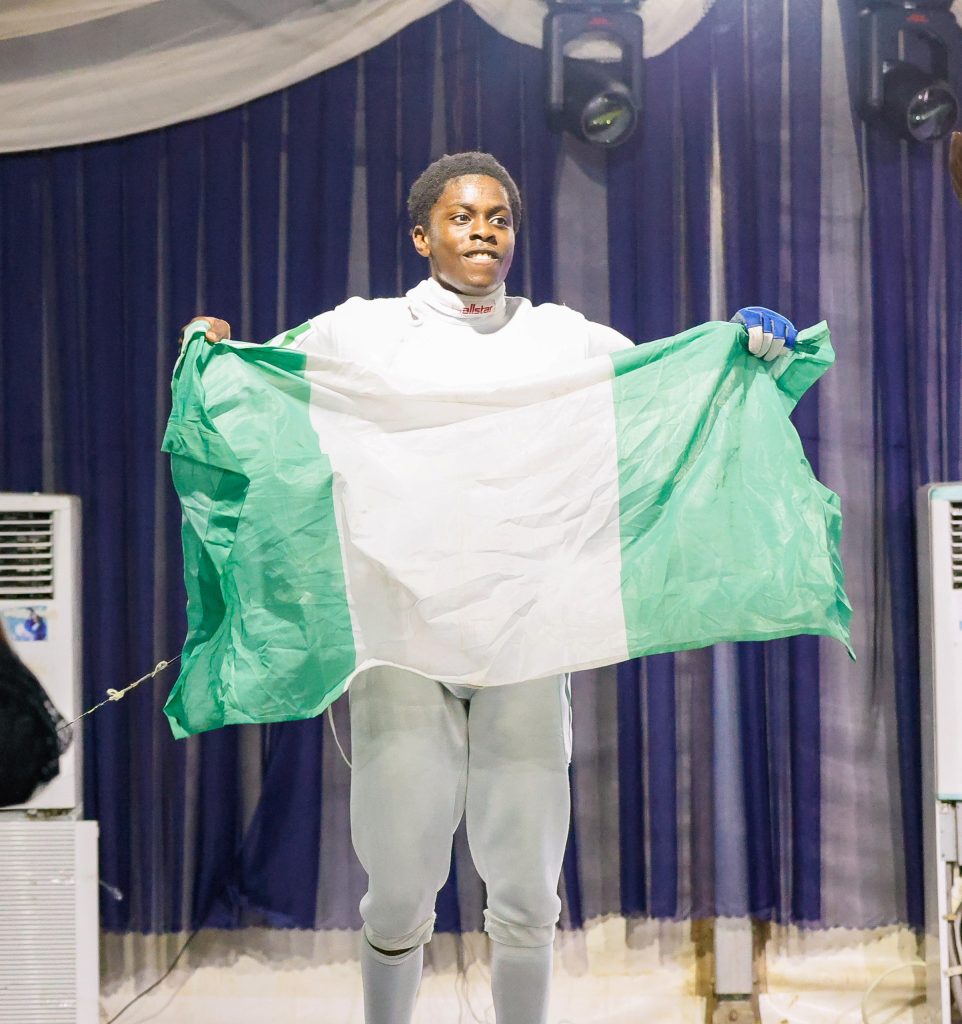
Fencing has traditionally carried an image of exclusivity, and the NFF is attempting to change that perception. Its specialised equipment, technical demands and relatively small footprint in Nigerian schools have kept it far from the reach of the average young athlete. This recent win illustrates a central lesson for Nigerian fencing: it highlights the talent pool while making a call for proper development through coaching, competition, facilities and international experience.
The structure of the 2026 championships deliberately creates opportunities for younger athletes to compete alongside established international fencers. The introduction of Under-23 individual competitions provides an important bridge between junior competition and the senior ranks, allowing emerging athletes to gain experience in an international environment before making the transition to the highest level.
The inclusion of wheelchair fencing as a full medal event is equally significant. Following its demonstration at the 2022 Commonwealth Fencing Championships in London, its integration into the Lagos programme gives athletes with disabilities a formal pathway to compete for medals on the Commonwealth stage. For young Nigerians, the message is clear — the piste does not have to be reserved for a privileged few.
Nigeria has spent years laying the foundations for hosting an international fencing competition through grassroots programmes, local tournaments and participation in events abroad. Lagos, in particular, has increasingly emerged as a focal point for the sport.
The city’s successful hosting of international competitions, including the FIE-sanctioned Junior Épée World Cup, helped demonstrate Nigeria’s organisational capacity and infrastructure required for global fencing events. This track record strengthened Nigeria’s case when it competed for the right to host the Commonwealth championships against Australia, a country with a considerably longer and more established fencing tradition.
Winning the bid represented more than a sporting victory. It was also a vote of confidence in Nigeria’s capacity to organise major international events. The decision has particular significance for Africa, where fencing remains relatively underdeveloped compared with other regions.
While Cape Town previously hosted a Junior-Cadet Commonwealth event, Lagos represents a new level of ambition — the first African venue for the Senior and Veteran Commonwealth Fencing Championships. The championships also arrive at a significant moment in Commonwealth fencing governance.
Adeyinka Samuel, President of the Nigeria Fencing Federation, has become the first African President of the Commonwealth Fencing Federation, defeating incumbent Marie-France Dufour 14 votes to six at the federation’s Annual General Meeting, held at Rugby School Nigeria in Eko Atlantic City, Lagos. This gives Nigeria an influential position within the sport’s international administration. His leadership, combined with Nigeria’s hosting of the championships, places the country at the centre of an emerging African fencing movement.
The presence of athletes from Ghana, Kenya, South Africa and Togo, among others, also provides regional fencers with an opportunity to compete directly against athletes from established fencing nations such as Australia, England, Singapore and Wales. Elite competition does more than produce medals. It further exposes local officials to international standards, competitions and talent-development programmes. Sustained over time, the impact could extend well beyond Nigeria.
The championships also point to fencing can contribute to Nigeria’s broader sports economy. Bringing more than 20 international delegations to Lagos generates demand across hotels, restaurants, aviation, transportation, event management, security and hospitality services, and provides an opportunity to showcase Lagos as a destination for sports tourism and future competitions.
As Nigerian fencing grows, so will opportunities in equipment, academies, coaching, sponsorship, broadcasting and digital content. International brands could use Nigeria as a gateway to Africa, while corporate investment can support youth development and talent discovery. But lasting commercial value depends on sustaining a historic championship infrastructure beyond the final medal.
The real legacy of Lagos 2026 will not be only the medals won during six days of competition, but what follows. Nigeria has one of Africa’s largest and youngest populations, creating an enormous potential talent pool. The challenge is to build the systems capable of identifying that talent early and giving it a pathway to excellence.