

Behind The Scenes: Nollywood, the AMVCA, and Africa’s Cultural Moment

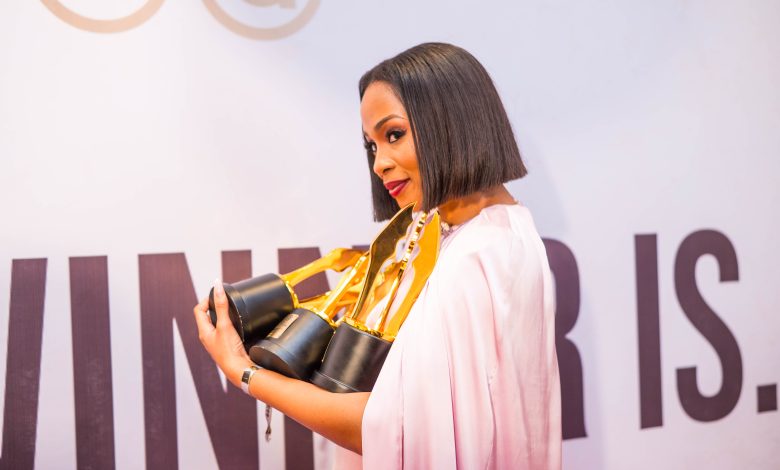
The stars came, as they always do. But this year, what they represented mattered more than how they shone.
The 12th edition of the Africa Magic Viewers’ Choice Awards (AMVCA), held on May 9 at the Eko Hotel & Suites, Lagos, was more than a night of glamour, historic wins, and emotional speeches. It was a statement. The ceremony served as a marker of a new chapter in Nollywood’s journey from regional phenomenon to global cultural force – and everything about the evening, from its hosts to its jury decisions, reflected that ambition.
The tone was set early and anchored by its hosts: South African actress Nomzamo Mbatha, who brought international poise, and veteran Nigerian comedian Bovi Ugboma. Bovi’s presence marked a historic shift – the first time in over a decade that legendary broadcaster IK Osakioduwa did not host the ceremony. This passing of the microphone reflects a deliberate, strategic choice by the organisers to shape the narrative of this year’s event, particularly given Bovi’s sharp, unfiltered satirical wit.
Bovi did not merely introduce categories; he actively leaned into the industry’s underlying frictions. By roasting high-profile snubs, joking about box-office rivalries, and poking fun at the relentless battle for online clout, he served as a comedic bridge. He externalised the very tensions brewing within the auditorium and across social media, and in doing so, set the stage for a night defined by fierce debate.
Akinola Davies Jr.’s My Father’s Shadow emerged as the night’s biggest winner, taking Best Film alongside four other awards: Best Director, Best Writing, Best Sound Design, and Best Music Score. Its success continues an international streak. The film has already won accolades at Cannes, BAFTA, and the Gotham Awards, and holds the distinction of being the first Nigerian film selected for the Cannes Film Festival in nearly 80 years.
Linda Ejiofor-Suleiman made history as the first actress to win both Best Lead Actress and Best Supporting Actress in the same year, for The Serpent’s Gift and The Herd respectively. Uzor Arukwe won Best Lead Actor for Colours of Fire, while Bucci Franklin’s heartfelt tribute to his late mother during his Best Supporting Actor acceptance speech was among the evening’s most emotional highlights. Special honours included the Trailblazer Award for rising star Uche Montana, recognised for her impact as both an actress and independent producer — particularly through her viral YouTube series — and the Industry Merit Awards for Nollywood icons Sola Sobowale and Kanayo O. Kanayo.
But the most revealing story of the night was not who won – it was who did not. Before the ceremony, critics and fans debated commercial dominance versus artistic merit. Public expectation centred on Funke Akindele’s record-breaking box-office hit, Behind the Scenes, which crossed the ₦2 billion mark. Many anticipated a clean sweep based on its cultural reach and commercial success. However, under the leadership of veteran actress Joke Silva, the jury prioritised technical excellence. The complete exclusion of Behind the Scenes, despite strong performances from Scarlet Gomez, Tobi Bakre, and Uzor Arukwe, was a striking demonstration of professional evaluation: by awarding Best Film, Best Director, and key technical honours to My Father’s Shadow, the jury underscored the importance of narrative depth, soundscapes, and execution over commercial clout.
This is where the AMVCA’s deeper value lies. Its credibility rests on a rigorous selection process: peer-reviewed technical categories balanced against public voting. This dual system ensures both critical acclaim and popular appeal, reflecting what the continent celebrates and how its youth perceive their place in the global cultural landscape. The separation between jury-decided technical awards and public-voted categories fuels online conversations that transform the event into a continent-wide digital festival – fans dissecting fashion choices, debating categories, creating memes, and celebrating their favourite stars.
More importantly, this tension elevates critical literacy among young audiences, encouraging them to look beyond online hype and assess film on its aesthetics, cinematography, and writing. For many young Africans, especially Nigerians, the AMVCA is more than an awards ceremony; it is an annual cultural moment, one that reflects a broader shift in how African youth consume and evaluate culture.









Today’s generation does not simply watch celebrities; they interact with them. Actors, filmmakers, influencers, and content creators are cultural figures whose influence extends into fashion, lifestyle, politics, entrepreneurship, and social commentary. By integrating categories for digital creators, the AMVCA legitimises smartphone-driven creativity. The recognition of independent digital productions such as Montana’s Monica signals to millions of young Africans that digital storytelling is both a viable career and an authentic art form.
The event’s red carpet, which has become a showcase for African fashion, reinforces this cultural confidence. Part Met Gala, part Oscars; but wholly, unapologetically African. Once dominated by Western luxury brands, the AMVCA’s fashion moment – anchored by the Cultural Night – now celebrates indigenous textiles such as Aso-Oke, Adire, and George wrappers, reimagined by young designers into avant-garde silhouettes. These viral styles reconnect a generation with its roots, redefining luxury through African creativity. Like film, fashion, has become a language of identity.
That identity runs through the heart of what the AMVCA now represents. African narratives have been repositioned from the margins to the centre of international media. Streaming platforms, diaspora audiences, and digital distribution have amplified their reach. The AMVCA asserts that African stories do not require Hollywood’s validation; their languages, histories, and lived experiences merit world-class celebration on African soil. African entertainment is no longer seeking global recognition; it is commanding it.
Young Africans are central to this transformation. A new generation of filmmakers, digital creators, cinematographers, stylists, and screenwriters is redefining African cinema. They are globally connected, technologically adept, and creatively ambitious. Yet as celebrity culture grows, questions of responsibility and representation remain vital to sustaining Nollywood’s reputation.
The AMVCA is no longer just an awards show. It is a symbol of an industry and a generation stepping confidently onto the global stage – telling their own stories, on their own terms, and commanding global attention in the process.
Yet as that influence expands, one conversation has yet to begin. The dazzling gowns and bold designs celebrated on the red carpet are cultural statements, but they also carry an environmental footprint and raise questions about African Fashion in a warming world. If Nollywood storytelling is reshaping global narratives, could AMVCA fashion also reshape global conversations about sustainability and climate action? That may be the next chapter worth writing.