

AFCON: Why Nigeria may not win the Nations Cup – Siasia
In part 2 of this exclusive interview, former player and coach of the Super Eagles, Samson Siasia, shares his candid views about the team's chances under coach Jose Peseiro, and local coaches
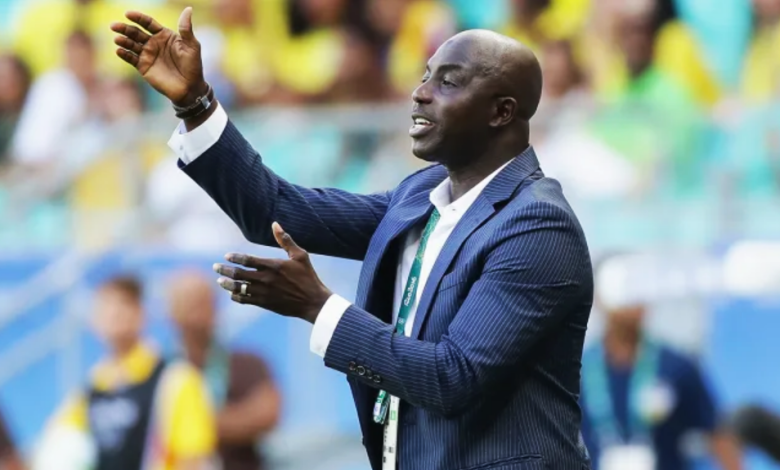
With a few days to the start of the Africa Cup of Nations in Cote d’Ivoire and the first match of the Super Eagles in Abidjan, it is more of shivering hope than intense expectations for many Nigerians.
With a developing team that includes reigning African Player of the Year, Victor Osimhen, and veteran striker Ahmed Musa, the Super Eagles may be among the favourites to win their fourth AFCON title. However, the team has not had time to bond into a formidable unit battle ready to compete for the coveted continental title. This is the more reason why former Super Eagles’ player and coach, Samson Siasia, thinks this hope could also be skating on thin ice.
While he stated earlier that the current Super Eagles team still have a good chance to win the AFCON title in Cote d’Ivoire if the odds favour them, he noted that this might be undone by inadequate time, organization and coaching.
The former Nigerian international didn’t hold back when I asked him about the Super Eagles head coach, Jose Peseiro, and his chances.
For Siasia, Peseiro might boast of good players in his 25-man squad for the tournament, but he lacks the antecedents to lead them to the title.
“We all know that man is confused. Look at his credentials. Do you know where Peseiro is from? Where has he coached before? You cannot bring someone who has not done anything before to coach Nigeria, one of the greatest countries in the world, the greatest country in Africa. You cannot bring in someone like that. It’s not going to last,” he says.
Picking a national team coach: Go local or global?
Having built a winning team with local-based players, Siasia, a big fan of his home state team, Bayelsa United, is a fierce advocate of local coaches and believes the Nigeria Football Federation (NFF) should give indigenous coaches more opportunities and time to succeed with the national teams.
“Countries have won the FIFA World Cup with their local coaches. That’s why I want us to look inward to make sure we train our coaches well. When you’re the coach of your own country, you are more determined and put everything that you have, to win, because you want to make your country proud. That’s what it’s supposed to be.”
“The other thing is the Nigerian Football Federation have to make sure the Nigerian league works. How can you play in the national team when you don’t have one player in the league playing in the national team? That also kind of tells us that league is not that good. In our playing days, we had six or seven players playing in the local league.
“We all watch the English Premier League. Why can’t we watch the Nigerian Football Premier League too? We have to make sure our league reaches the level that players are good enough to play in the national team.”
Siasia adds, “You can’t build a team in two months. So, they have to give Nigerian coaches time to build a team. We do it from our hearts because this is our country.”
The late Stephen Keshi, an indigenous coach, won Nigeria’s third and last AFCON title 10 years ago, with a significant number of home-based talents. And the ‘big boss’ did it as Eagles coach in two years, and led the Eagles to the round of 16 at the FIFA World Cup. German coach Gernot Rohr got five years (2016-2021) as Eagles coach. His best results were two third-place finishes at AFCON.
The great Dutch coach Clemens Westerhof had five years to build a golden generation that won the 1994 AFCON, finished second and won bronze in 1990 and 1992 respectively.
Would he accept another offer from the football federation to coach the Super Eagles again? He dismisses it as something that “is not going to happen.’ In his first stint as Eagles coach in 2010, he was appointed to replace Swede Lars Lagerback.
“In the two times I’ve coached the Super Eagles, they (NFF) came to me when they were having these issues. But they did not give me a chance to build a team that I want as Eagles coach. That’s why it didn’t work. Oliseh ran away.”
Local coaches in Nigeria deserve more respect and equal treatment given to foreign coaches, Siasia adds.
“For example, a foreign coach will be hired and paid like $70,000 (N84 million) a month. When they hire a Nigerian coach, they will want to offer you one million Naira for the same job that a white man is doing. Is a white man (coach) better or more qualified than a black person? I don’t think so. So why can’t we treat our own people the same way they are treating a white person? The system doesn’t want to respect local coaches, but they have to.”
“Keshi won the Africa Nation’s Cup, but he went through hell before he won it. They don’t want to respect local coaches. It’s about time they do, because local coaches will die for the country. They will put everything at stake to make sure the Nigerian team wins laurels. It’s about time we look inward.”
While he urges local coaches to improve their football knowledge, he also advocates for the return to school sports, developing grassroot sports and building quality infrastructure nationwide to help discover and harness local talents across football and other sports.
“Without youth development, you won’t get a national team, it’s as simple as that. Because at the end of the day, we are all going to grow old. We need to replace men. Even as coaches and all that, as football players, without youth development, you will never move anywhere. You will never get a team that competes at the end of the day.”
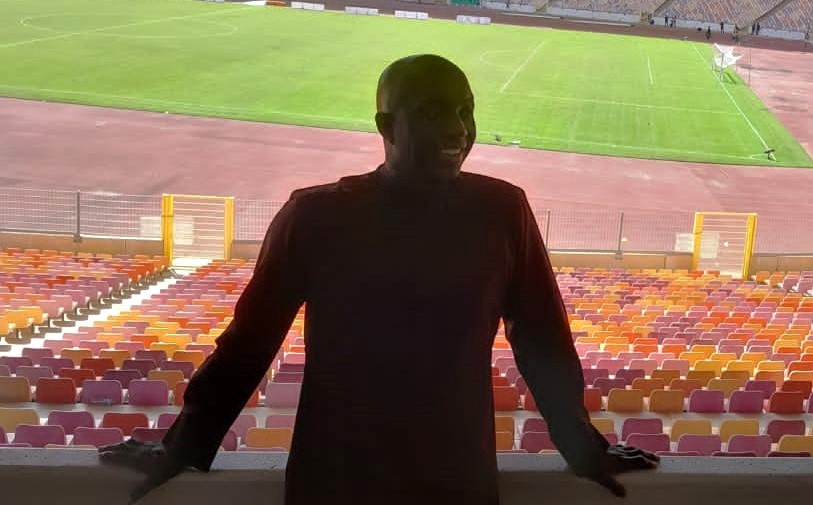
Building another golden generation
Developing young players that would become world beaters is something Siasia is passionate about. Current African Player of the Year, Victor Osimhen once played under his tutelage as U-23 Olympics coach.
He describes the Super Eagles striker as level headed, and commends his attitude and friendly disposition with fans.
What would he tell Osimhen if he were to advise him as a mentor? “I would tell him, ‘You still have a long way to go. You have to stay calm and focused.’”
With big European clubs jostling for Osimhen’s signature, Siasia is of the opinion that the Napoli striker should choose English Premiership club Chelsea as his next destination, because they don’t have a striker of his quality.
“If the money is good, he should go, of course. Even if he has to go to Saudi Arabia, let him go and get the whole money. But he’s still a little bit too young. Maybe in later years. But for now, I think he should go to Chelsea, because Chelsea don’t have a good striker.”
For the Super Eagles, Siasia, again, emphasizes the importance of time and right coaching to harness the team’s quality for success.
“We need time to build a team. And we don’t have that time because time is gone. In another 10 years’ time, we should be looking at trying to win the World Cup, not just the Nations Cup. But we have to start building now.”
Maybe the rebuilding process could start with the current crop of Eagles, with Osimhen and co. as the pivots?
“Let’s see how they improve from now on,” Siasia adds.
Editor’s Note: You can read part one of the interview here.