


Lagos to Los Angeles: How We Built a $3 Million Sustainable Shoe Brand — Yewande Akinse, Co-founder, Salubata
It began in Lagos after a young Nigerian woman and her partner dared to dream and chose to build. About six years after, Salubata Technologies - a sustainable footwear startup making modular shoes from recycled plastic - has produced over 6,000 pairs and counting. In September 2024, it won second place and $40,000 at the NBA Africa Triple-Double Accelerator. In this Africa Interviews exclusive, Nigerian-born poet, author, entrepreneur and co-founder Yewande Akinse shares the inspiring story of how they built Salubata.


Dreams don’t come with a multimillion-dollar subscription. They are raw, unrefined, and forged in the trenches. As an entrepreneur, you never truly know where the shoe pinches until you walk in it.
For Yewande Akinse (née Adebowale) and her co-founder and husband Fela, that journey began in Lagos and has taken Salubata from Lagos to global stages, building a multimillion-dollar sustainable footwear brand with footprints in US and European markets.
When Salubata Technologies was named as one of four winners of the inaugural NBA Africa Triple Double Accelerator programme in September 2024, it was an unexpected win.
The Nigerian startup, which makes modular, customised shoes from recycled plastic waste, alongside Festival Coins (Nigeria), HustleSasa (Kenya) and UBR VR (Egypt) were recognised at the event held at the NBA headquarters in New York, on the sidelines of the 79th session of the United Nations General Assembly (UNGA79).
The four winners were among the 10 finalists of the inaugural NBA Africa Accelerator programme, launched to support the continent’s technology ecosystem and the next generation of African entrepreneurs.
For Yewande and her team, winning the $40,000 award was validation of faith, doggedness, determination, hard work and consistency.
Salubata is a Yoruba word meaning ‘shoes/sandals made to last’ in English. But not just any shoe – a tough, long-lasting pair, despite the terrain. If you have ever walked several kilometres across rough terrain without shoes, you would understand the value and ruggedness of a Salubata. It is footwear that never gives up.
A lawyer, entrepreneur, poet, author and climate change advocate, Yewande and her co-founder and husband, Fela, have carried this ethos into building the footwear company from scratch, which she says is now worth about $3 million.
It started as a vision shared by a couple in 2020.
“I did not expect to win. The judges decided the winner. I just went there, did my best, and hoped for the best,” she says later about that NBA win.
That recognition has since helped the company to achieve several milestones and key performance indicators, including continuing research and development efforts and filing additional patents for its modular technology.
“That prize money came at a critical time for our business, and we are very grateful for it,” she adds.
The beginning
But not every street is paved with gold at the start.
The now multimillion dollar Nigerian company was once a dream borne in an area once infamous as a slum in Lagos, Nigeria’s commercial capital.
For years, many parts of Ajegunle were waterlogged due to clogged drainage systems, and riddled with plastic waste. This posed environmental challenges that led to flooding and other problems.
Inspired by her environment, Yewande saw an opportunity within that challenge and turned it into a business.
From writing and publishing poetry about love, life and the environment, she eventually stepped into entrepreneurship with blind faith, but dogged determination.
“While growing up in the Ajegunle area of Lagos, we were often surrounded by plastic bottles and waste. Whenever it rained, our house always got flooded. It was at that time, at a very young age, that I realised the menace of plastic pollution,” she recalls.
Without a clear template, Yewande looked for ways to solve the challenges in her immediate environment. They seemed like shoes too big to fill. Until she later found love – in a place filled with hope and dreams
She first met her husband – and co-founder – in 2010 when they were both undergraduates at the University of Lagos, where she studied law. That friendship quietly grew into love, and by 2019, they officially started dating.
It would also give birth to a footwear company. The company’s logo tells its own story – two shoes facing opposite directions that, when combined, form the letter “S.”
“When I met my co-founder, we started exchanging ideas about things we could do differently and how we could use our lifestyles as artificial carbon sinks. We asked ourselves; how can we use our lifestyles to solve problems?
“We decided to start making shoes from recycled plastic waste. Through that, we realised we could offset carbon and reduce the volume of plastic waste that would otherwise end up in the oceans.”
When they got married in 2020, Salubata became official too. With the company, they have been doing just that – converting waste into sustainable footwear.
The vision started with the two of them. Now they have more personnel working for the brand.
Inspired by a dream that seemed far away, Yewande – like every poet – found meaning beyond the lines, giving voice – in this case, soles – to a passion, and walking with it.
The exodus, and future
Unofficially Salubata started in 2020. It became official in 2021. Things really kicked off later that year when they got their first big funding in November 2021 – a $100,000 grant from the African Development Bank (AfDB).
Yewande, representing the startup, was named among the 10 winners of the inaugural $1 million African Youth Adaptation (YouthADAPT) Solutions Challenge at COP26 — a climate adaptation competition jointly run by the African Development Bank and the Global Centre on Adaptation, recognising the continent’s most promising youth-led businesses tackling climate change.
With that, the footwear startup was able to scale up and expand beyond Nigeria into Europe and North America.
In 2022, the Nigerian startup won $10,000 when it was named one of the top four winners of the Kigali Startup Festival 2022 at the Commonwealth Youth Forum (CYF) in Kigali, Rwanda. Yewande received recognition from the president of their home country.
At a town hall meeting with Nigerians on the sidelines of the 26th Commonwealth Heads of Government Meeting (CHOGM) in Kigali, Rwanda, in June 2022, Nigeria’s former and late President, Muhammadu Buhari, commended Yewande and two other Nigerians (Esther Olanrewaju and Favour Aderinto) for their global feats.
‘‘I am proud of you all, and I remain ever proud of our Nigerian youths excelling at home and abroad,” Buhari was quoted as saying.
Backstory
Before the breakthroughs, Salubata had struggled.
Yewande and her co-founder pooled $50,000 from their combined personal savings accumulated over several years. At the exchange rate of N399–N410 to the dollar in 2020/2021, that translated to roughly N15 million–N20 million — enough for a young Nigerian graduate to ‘Japa’, pack up and start a new life abroad. It was no mean feat.
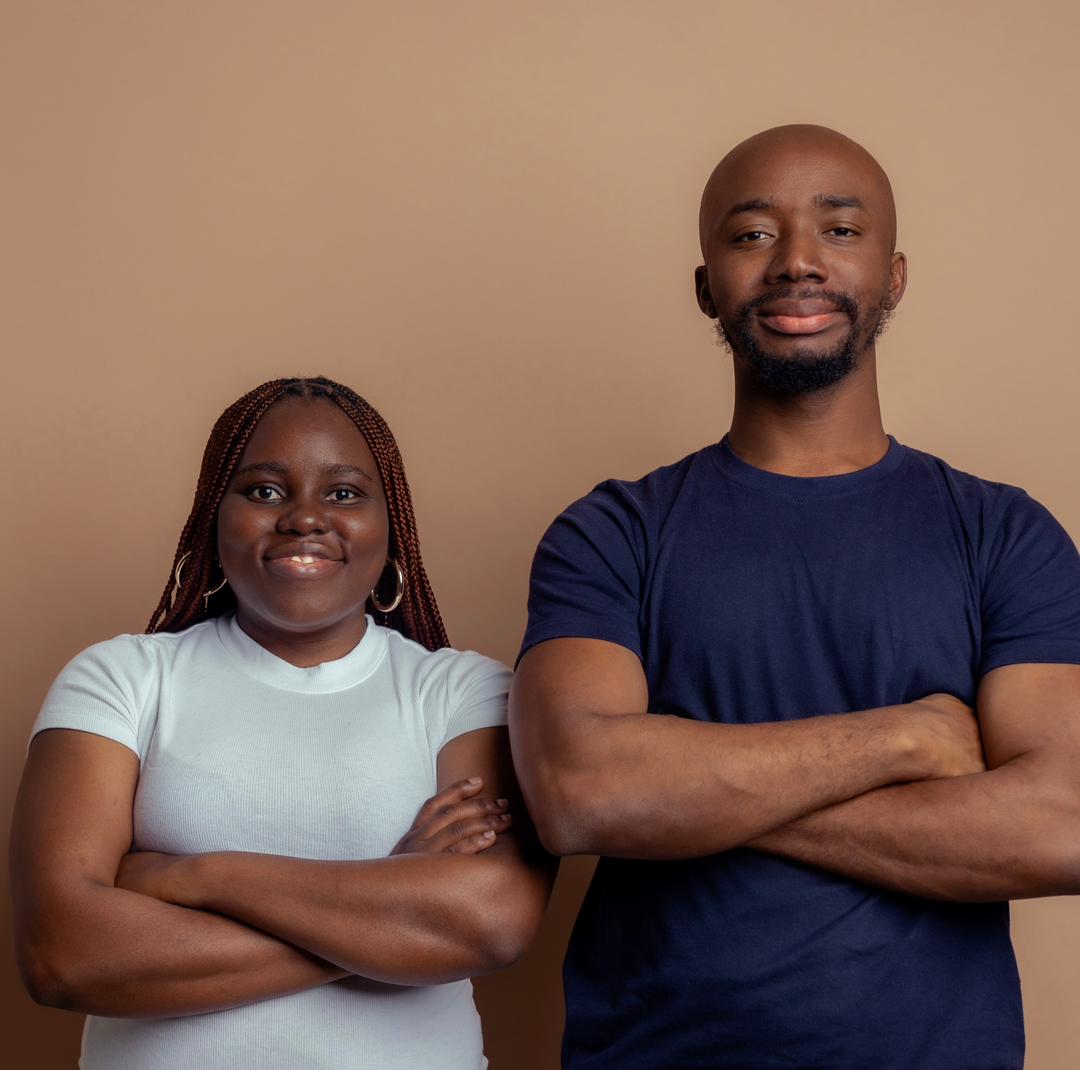
Instead, Yewande and her husband decided to invest that money into building a sustainable footwear brand – what they proudly describe as the “world’s most magical shoes designed to end plastic pollution.”
“Salubata” carries a history of overcoming tough terrains to get people to their dreams. Many young Nigerians back in the 1980s and early 1990s, especially from the South West, wore Salu/Bata to schools and beyond, chasing dreams of a better life. The name holds that memory. Now, Yewande and Fela are building on it.
Making shoes is expensive. They learned that quickly.
“Then we had a small factory in the Yaba area of Lagos, but we had to close it down because we could not afford to continue running it while dealing with depreciating assets. We also had problems with standardisation while manufacturing ourselves, because we could not afford certain materials and machines.”
With just the two of them, the company also faced another challenge: manpower.
“We were making use of what we had, but it wasn’t doing the job well. The shoes were not finished properly, and people complained that they were not beautiful or properly finished. At that point, we began looking for options. That was when we decided to outsource major areas of the business, particularly manufacturing, while we managed other aspects – including branding and the supply chain – ourselves.”
In 2023, after four years of experimentation, iteration and dogged persistence, the startup finally broke even.
But breaking even came with a shift in thinking. The co-founders didn’t want to make just shoes. They stepped back, reassessed and made a pivotal decision – incorporating modular technology into their sustainable footwear design, while looking beyond Nigeria for capital.
A conversation with a potential funder — although they did not invest eventually — proved pivotal. The advisors urged them to improve quality and branding, noting that with those changes, the business could scale and potentially position for an exit. They also advised targeting the US market.
“From then, we improved the quality of the shoes. I have pictures of how the shoes used to look and how they look now,” Yewande recalls.
After joining and receiving funding from Textile Arts Los Angeles, a US nonprofit organisation, Salubata gained access to new funders and foreign markets. The company is now headquartered in Los Angeles – a move that proved a major boost to its operations, revenue, and overall business growth.
Apart from Textile Arts Los Angeles, they have also received funding from Render Capital. As one of the 12 winners of the Render Capital’s 2024 competition to support innovative startups, the company was awarded a $100,000 investment.
From producing a few hundreds, Salubata has now sold over 6,000 units of its modular footwear.
“Initially, we were doing about 200 to 250 pairs within six months. But when we started outsourcing, we did production in batches of 500 shoes every two months. That is how production accelerated,” Yewande says.
The company currently produces in Europe (Portugal), and continues to evolve in increasing its quality and proposition.
“We have upgraded the soles, giving them a premium look and feel,” Yewande says proudly. “Anyone can look at them now and say, “Yes, this is an aesthetically pleasing shoe.” Over time, we have also increased our branding efforts, and pricing.”
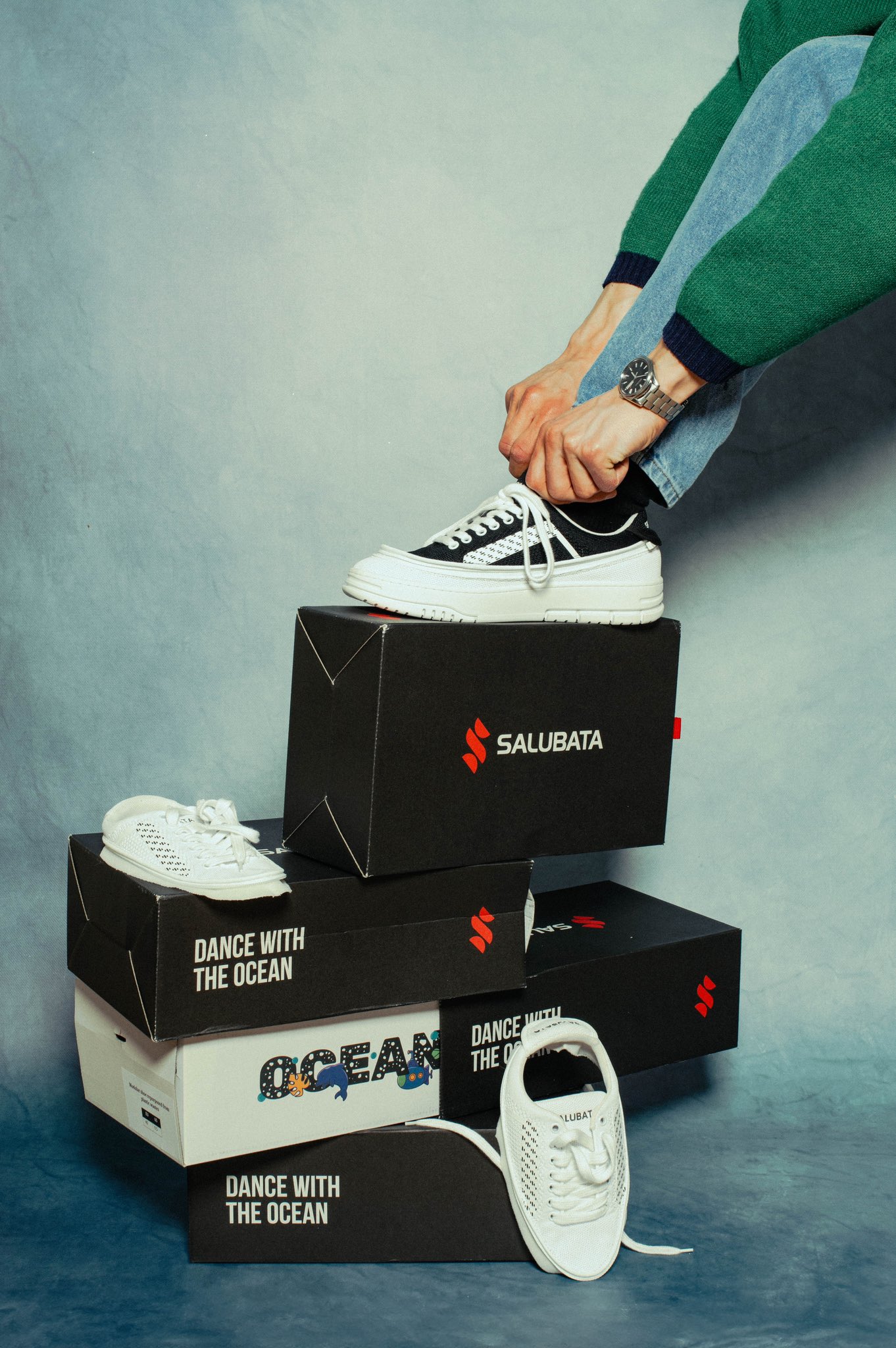

The sustainable footwear startup grew by turning challenge into opportunity, and innovating with technology.
The global footwear market is projected to be valued at over $560 billion by 2027-2030, while the sustainable footwear market is growing at about 13% per year, and is projected to exceed $10 Billion by 2030.
In designing shoes with sustainability in mind, Yewande says they didn’t only have to innovate, they also had to identify their target market and break into it by leveraging a comparative advantage.
“Beyond our background as environmentalists, we saw a huge market opportunity in footwear, especially leveraging sneaker culture. Sneaker culture is very prevalent in major cities like New York and Los Angeles.
“In Nigeria, not so many people wear sneakers daily, but abroad, sneakers are the footwear of choice. We decided to leverage that wave. We also made our shoes modular – meaning users can detach components and attach different uppers in different colours. Users can customise their footwear.”
The soles of a Salubata sneaker can last at least five years, while different uppers can be used with the same sole. A smart design solution that reduces waste and extends the life of every pair.
In the US, European and North American markets, the prices of their sneakers vary. To make it more affordable for the African market, but still with good quality, Yewande says the company plans to release shoes, also made from recycled materials, that cost about $50 or less.
The company reportedly allocates 5% of its profits toward programmes supporting women in local communities.
Faith and grind
Starting and running a business is not for the fainthearted, especially in Africa.
But Yewande says she and her co-founder stayed inspired by their faith in their shared dream. She urges young Nigerians and Africans never to give up on their dreams, despite the challenges of their location.
She also notes that young Africans should seek ways to find solutions to the challenges within their ecosystem. “At the early stages, funding was our biggest challenge. But there are more opportunities now than ever before, especially for startups and for women.”
She adds that the Internet has democratised global opportunities.
“We have stayed afloat and scaled because we received extra help. The scaling came from consistently applying to opportunities – and we got them. You don’t need to know anybody. We didn’t really know anyone. The internet has decentralised access to opportunities. There are several platforms. People just need to monitor and apply for them.”
She encourages young African entrepreneurs to apply to hackathons and incubators, noting that many of them accept early-stage startups and offer significant seed funding, some of which is equity-free.
Many may point to the hydra-headed challenges on the continent that come with successfully building a business from scratch. But Yewande understands the power of bulldog faith and personal effort in making possibilities happen in the unlikeliest of places.
“Yes, it may not have been possible before, but in today’s world, it is possible,” she says, “But you need the right team – people who can pitch, people who can code (for tech startups), and people who can market.”
She also adds that especially for tech startups, it is important that everyone involved should be willing and able to apply for opportunities for the team as a whole.
A lawyer, social entrepreneur, poet and author, Yewande started writing “because there was a voice inside me that sought to understand the world.” That voice had already shown glimpses of the future. In September 2022, she emerged as the winner of the World Bank YouthActonEDU Spoken Word Prize.
Today, that voice has found other expressions in technology and entrepreneurship.
“I started writing in 2009. I published my first book in 2016 and my second in 2019. I also have an unpublished children’s poetry manuscript. I had to write under strenuous conditions without support, and I felt that it was a hard path. Right now, my poetry has taken a backseat. There are not many opportunities for poets compared to entrepreneurs. It’s unfortunate, but it is what it is.”
But for now, the shoes must come first.
The build
There is a stage they call building small and building quietly. It is one of the toughest but most enriching parts of the process, not in monetary terms but in intrinsic, unquantifiable value. The value of self-worth, of knowing that you are building something beyond yourself, something that lasts, a legacy that can transform lives and generations. There is no ovation at the start, only grinding hard and quietly. But when the work is done, the ovation is loudest, and sometimes deafening.
This is what Salubata has been doing for years. From two co-founders, the company has grown into a global brand reaching markets across the US and Europe. What began as an idea in Lagos has gradually evolved into a company building sustainable footwear, and now technology.
They say the future belongs to those bold enough to build it. In the next five to 10 years, Yewande says Salubata plans to transform beyond producing modular shoes into developing technologies around fashion and lifestyle – what she describes as “technologies that solve problems.”
“A person can wear a shoe and the shoe is not just aesthetically pleasing, but it actually does something. We are now working on shoes that trap atmospheric carbon and, with each mechanical action from the consumer, release breathable oxygen. We are currently doing R&D to test the feasibility of this technology.
“In the long run, we are moving from just making shoes to the developing technologies, and our plan is to license those technologies.”
At the heart of this vision is the startup’s carbon-capture footwear technology, designed to trap atmospheric carbon and produce breathable oxygen using the motion of walking. The company has since filed a US patent.
“We plan to license this technology to global brands like Nike and Adidas,” she says.
From a dream to the feet of thousands – and millions more to come – Salubata has evolved, and keeps evolving. It is not just a story of love and business, or of building a multimillion-dollar company. For Yewande and Fela, the best way forward was to walk for miles in their own shoes – and make better ones.
Who knows – Nike may be calling soon. To walk in their shoes.